
Deep Dive
Aviator Game Mechanics Explained
This page explains the round structure, the multiplier timeline, and what each common UI phase means—so you can read the screen correctly.
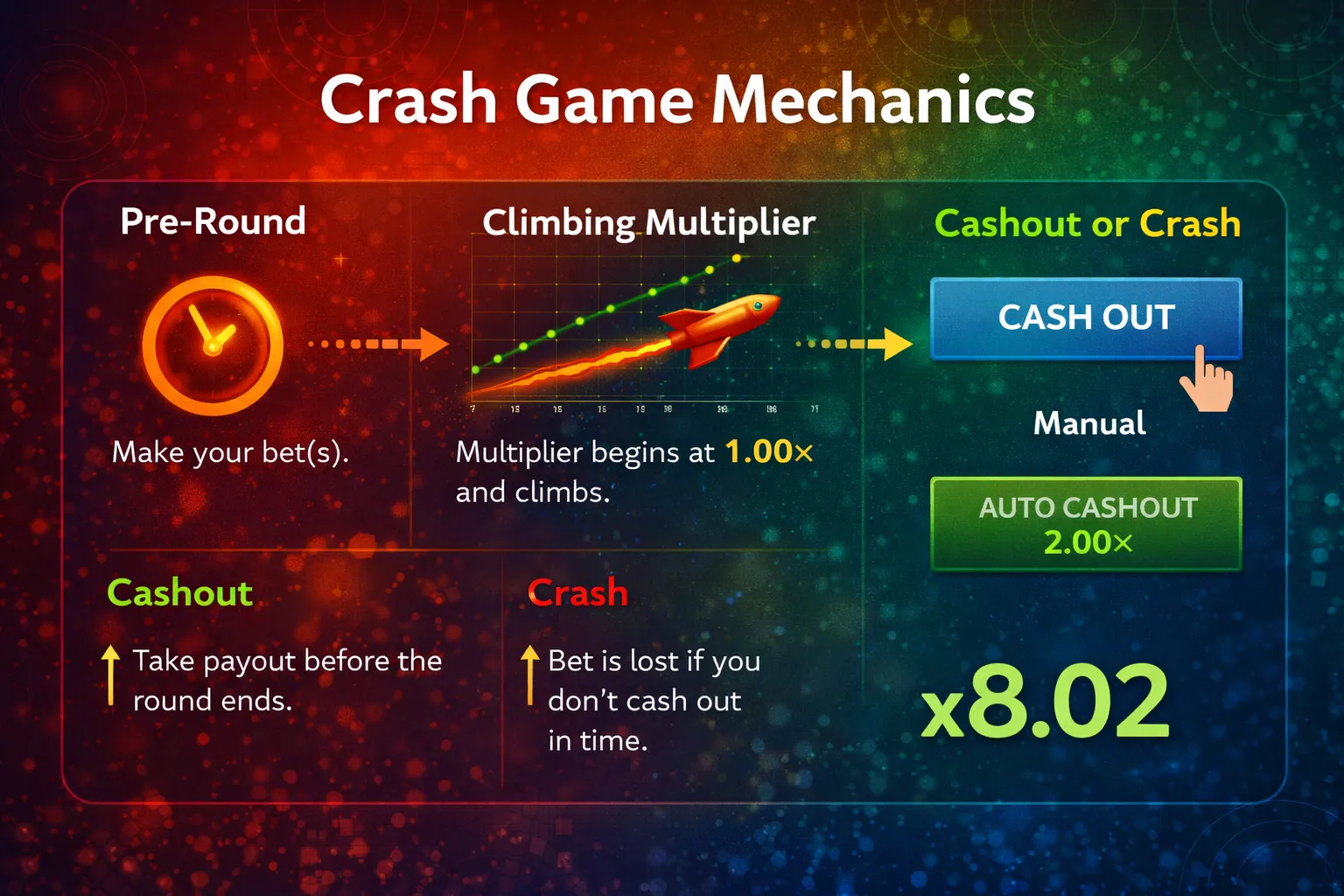
Round Lifecycle (Phases)
| Phase | What you see | What it means |
|---|---|---|
| Pre-round / Countdown | Timer or “Place Bet” state | You can enter stake, set auto-cashout, and place a bet before the round starts. |
| Live multiplier | Multiplier rises (1.00× → upward) | The round is active. You can cash out manually (or wait for auto-cashout if set). |
| Round end (crash) | Final multiplier appears in history | The round ends at an unpredictable moment. Cash out must occur before this point for that bet. |
| Result / Reset | Balance updates, new countdown | Payouts (if any) are settled, and the next round becomes available. |
Multiplier Timeline: How Payout Is Calculated
Payout is tied to your cashout multiplier. If your stake is ₹100 and you cash out at 1.70×, then payout is ₹170 (before any platform fees/adjustments). If the round ends before you cash out, the bet is lost for that round.
| Stake | Cashout | Example payout (before fees) | Notes |
|---|---|---|---|
| ₹50 | 1.30× | ₹65 | Lower multiplier typically means quicker exit. |
| ₹100 | 1.80× | ₹180 | Mid-range target used by many casual sessions. |
| ₹200 | 2.20× | ₹440 | Higher target increases risk of missing cashout. |
Where Confusion Usually Happens
- History vs prediction: history is a log of past crash points, not a guarantee about the next round.
- Auto-cashout timing: auto-cashout attempts to trigger at your set multiplier only if the round is still active.
- Input timing: placing a bet is typically allowed only in the pre-round window.
- Latency: device/network delays can affect manual cashout reaction time.